
Insights from DeviceTalks Boston 2026
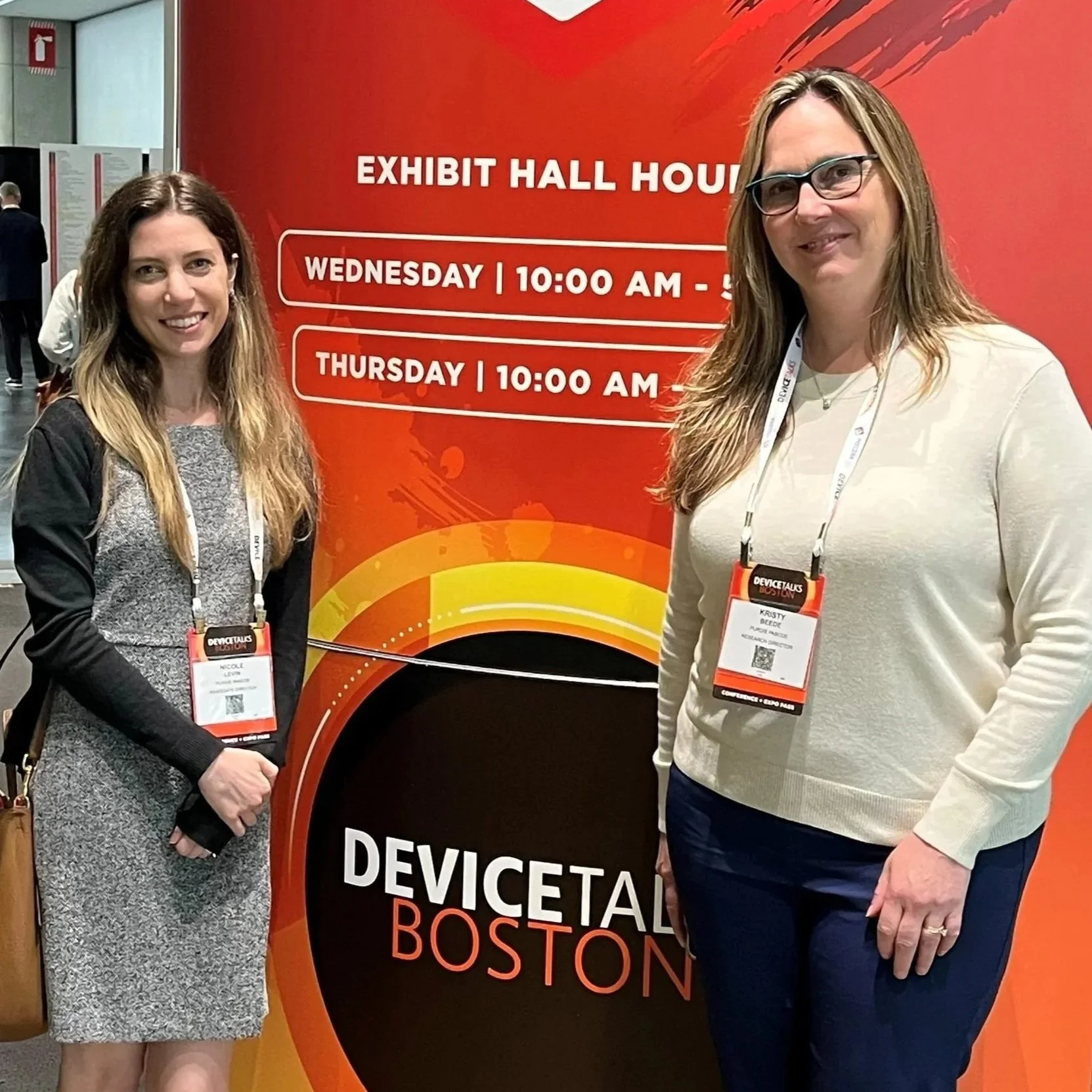
DeviceTalks Boston 2026 brought together MedTech leaders, innovators, and investors to discuss the realities shaping medical device and technology development today. Kristy Beede, Research Director, and Nicole Levin, Associate Director, attended the conference, where the conversations reflected a sector that is becoming more connected, more data-driven, and increasingly focused on scalable, real‑world impact.
Key takeaways
AI as a driver of competitiveness and investment
A defining theme throughout the conference was the growing role of artificial intelligence, not just as a feature, but as a requirement for future competitiveness. AI is now closely linked to funding decisions, with increasing pressure on device developers to demonstrate how intelligent systems are embedded within their solutions. The discussion has moved beyond individual tools, with a clear shift towards integrated ecosystems where AI works alongside complementary technologies to support better clinical outcomes and more efficient care delivery.
Reducing complexity within clinical workflows
Efficiency was another consistent theme, particularly in how new technologies are designed to simplify clinical workflows. AI-driven assistants are beginning to play a more active role in procedures, managing tasks such as image handling, time tracking, and access to patient data. This allows physicians to focus on the procedure itself, rather than the surrounding coordination. In parallel, advances in single-use robotic systems are helping to reduce setup time and enable faster treatment in urgent settings, including cardiac and neurovascular cases.
Making advanced procedures more accessible
These developments are contributing to a broader shift towards making complex procedures more widely accessible. Technologies are increasingly being designed with usability in mind, enabling a wider range of physicians to perform advanced interventions. The move towards single-use systems further supports this by removing the need for significant capital investment, opening up access for lower-volume hospitals and supporting more flexible models of care delivery.
Addressing gaps in access to care
Access to care, particularly in underserved and rural settings, remained a core focus across discussions. Challenges around limited specialist availability and access to advanced equipment continue to impact patient outcomes, especially for time-sensitive procedures. Innovations such as and robotic-enabled telesurgery are beginning to extend expertise beyond traditional geographic boundaries, allowing more patients to benefit from advanced interventions regardless of location.
The shift towards integrated MedTech ecosystems
Underlying many of these themes is a clear move towards integrated, end-to-end technology ecosystems. Rather than operating in isolation, devices are increasingly expected to connect with broader platforms that combine diagnostic data, electronic medical records, and intraoperative tools. This enables more personalised treatment planning and execution, while also creating opportunities for closer collaboration between companies. Partnerships across the ecosystem, including those involving organisations such as NVIDIA, Mantyx, and Infor, highlight how interoperability and shared data are becoming central to innovation.
The discussions at DeviceTalks Boston 2026 point to a broader shift in MedTech, where success is increasingly defined by how well technologies integrate, scale, and deliver impact in real-world settings. As expectations continue to evolve, the focus is moving beyond innovation alone to how these solutions improve efficiency, expand access, and support more connected care delivery.