
PMS, PMCF and lifecycle evidence: Key takeaways from the TT Lifesciences PMSV & QARA Conference
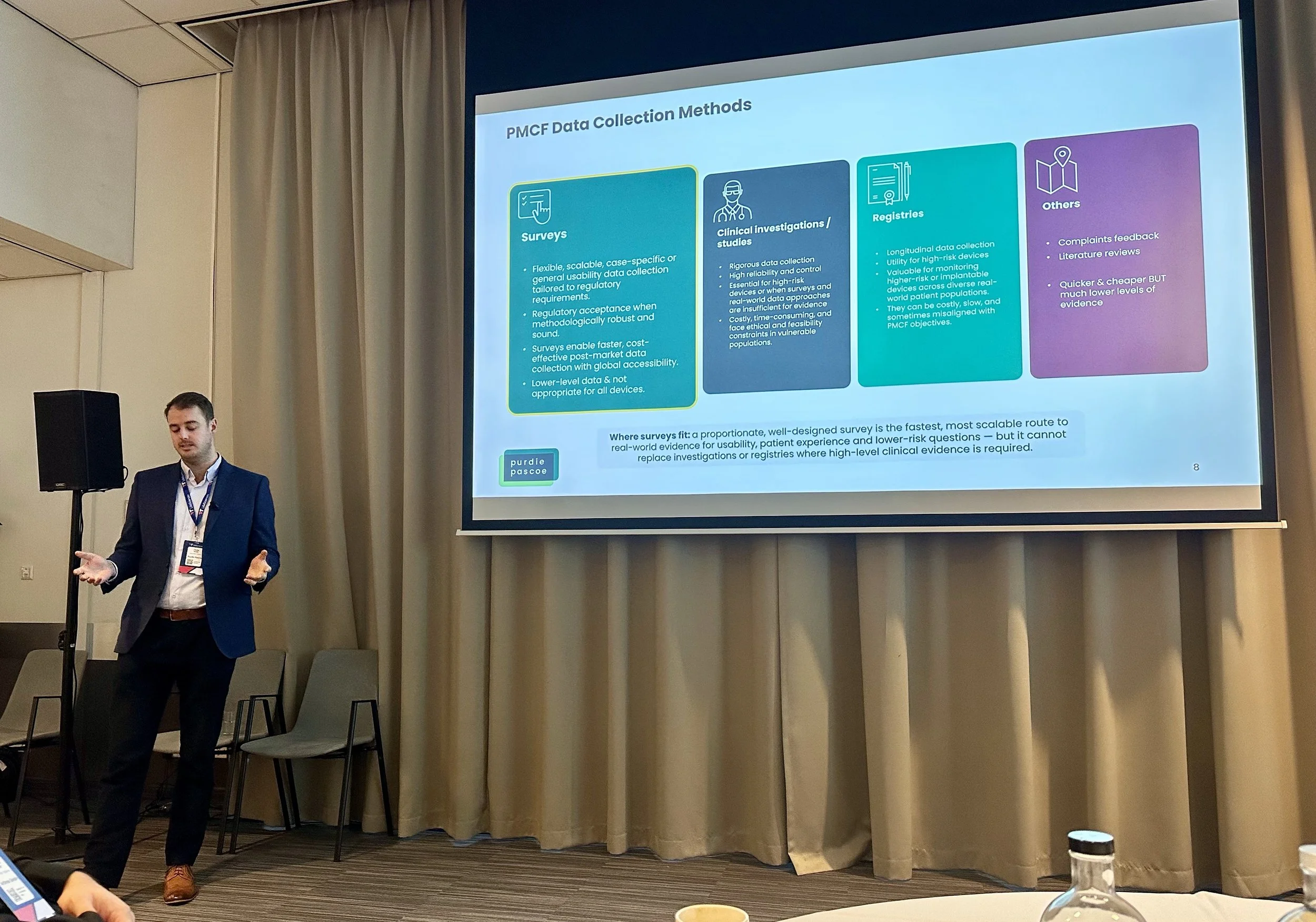
A key takeaway from the TT Lifesciences PMSV & QARA Conference was that an effective PMS system is only as strong as its connection to PMCF. PMS identifies the signals, trends and evidence gaps that should inform PMCF, while PMCF generates proactive clinical evidence that feeds back into PMS, clinical evaluation and risk management throughout the device lifecycle.
That linkage needs to be visible, whether through clearly aligned plans, reports and procedures, or through strong and regular communication between PMS, clinical, regulatory, risk management and external partners. Where those connections are weak, manufacturers risk duplicated effort, inconsistent conclusions and avoidable Notified Body questions. Ultimately, strong PMS and PMCF should operate as one continuous, cross-functional system rather than separate documentation or reactive compliance exercises.
PMCF surveys as defensible real-world evidence
On the second day of the conference, Chris and Marcus presented: “PMCF surveys as defensible real-world evidence: when to use them? How to design them? And how to survive Notified Body scrutiny?” Within the presentation, they discussed where PMCF surveys fit within wider real-world data collection, what Notified Bodies often challenge during reviews and how best to overcome these challenges, before sharing a case study highlighting how to effectively plan, implement and report on a PMCF survey that can stand up to Notified Body scrutiny.
The presentation prompted further discussions throughout day two and echoed one of the common themes at the conference: the importance of collecting data throughout a device’s lifecycle, not just within specific reporting periods. PMCF data collection should be a continuous process, looking to close clinical gaps or strengthen a device’s clinical evaluation. PMCF surveys can be a cost-effective method of collecting this data, but only if they are designed and implemented properly.
Having data is not the same as answering the question
One consistent theme repeated over the two days was that nobody failed for lack of data. In many cases, manufacturers’ teams are swimming in it. Markus Pöttker from Smith+Nephew described pulling sales, complaints, serious incidents and PMCF outputs into a single governed data lake, and yet submissions are still being rejected by Notified Bodies because the data hasn’t answered the question. Julia Stindl from Novocure recommended using the least burdensome approach that can genuinely answer the question.
The other word repeated in almost every presentation was lifecycle. As Ate Loonstra put it, “The value of PMS is not collecting information; it is turning information into better lifecycle decisions.” In other words, lifecycle only means something if the data changes something, and the proof that it did is a change you can point to. Christian von der Grün measures precisely that: the number of product improvements and changes triggered by post-market surveillance, which are then reported upward to his board. As he put it, “Every complaint tells a story, and the responsibility of PMS is to recognise the story before it becomes a safety crisis.” You cannot recognise a story in data you never asked a question of.
Why surveys can help fill the gaps
This is where we think surveys are underrated. Unlike most post-market sources, a survey is designed backwards from the question: you start with the endpoint in the clinical evaluation, or the open risk sitting in the file, and you only write questions that feed it.
Done this way, a survey reaches what passive sources structurally cannot: how the device is really handled, workarounds and off-label use, reprocessing in practice, and performance the user notices but would never raise a complaint about. A well-specified survey is often the least burdensome way to fill the gaps, provided, of course, that the respondent can genuinely know the answer over a recall period they can honestly report against.
Ultimately, the conversations across the conference reinforced the importance of connecting PMS, PMCF and clinical evidence throughout the device lifecycle. It is not simply about collecting more data, but making sure the data being collected answers the right questions and can genuinely support better lifecycle decisions. As Ellie summarised, “From the numerous case studies shared, not one failure came from a shortage of data. It came from data that never answered a question anyone had actually asked. That’s the gap a well-designed survey is built to close.”
Want to find out more about how Post Market Surveys can support your post-market evidence needs?